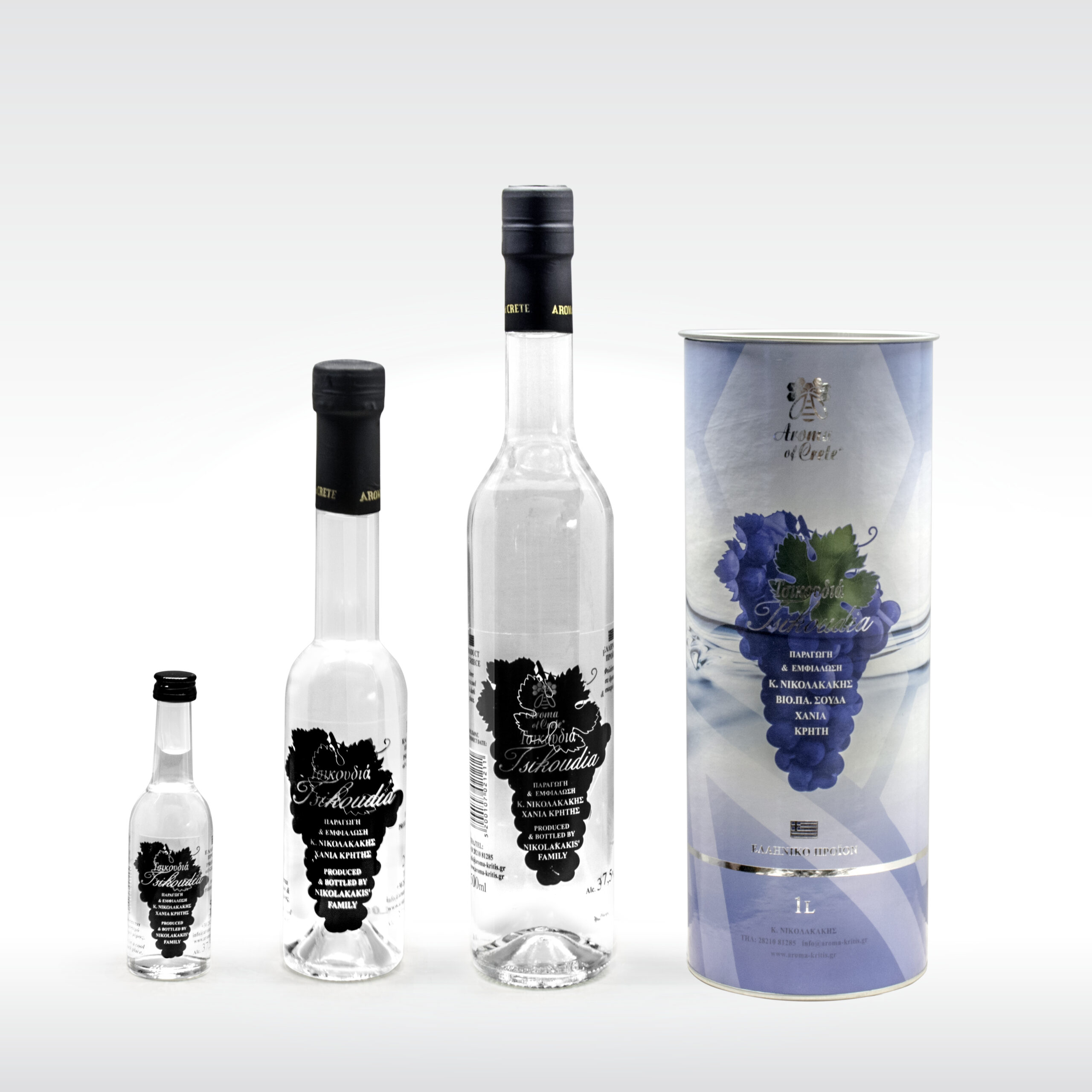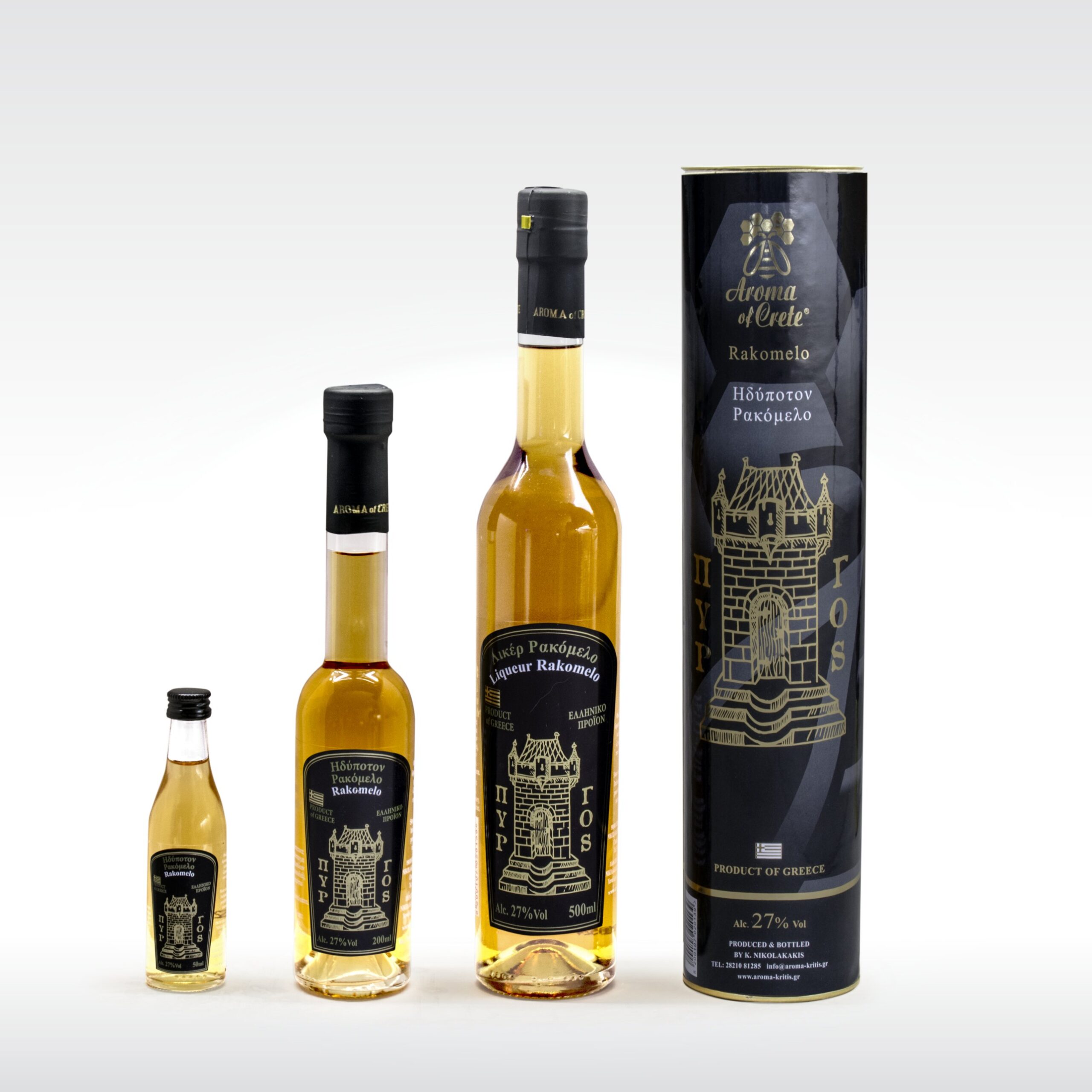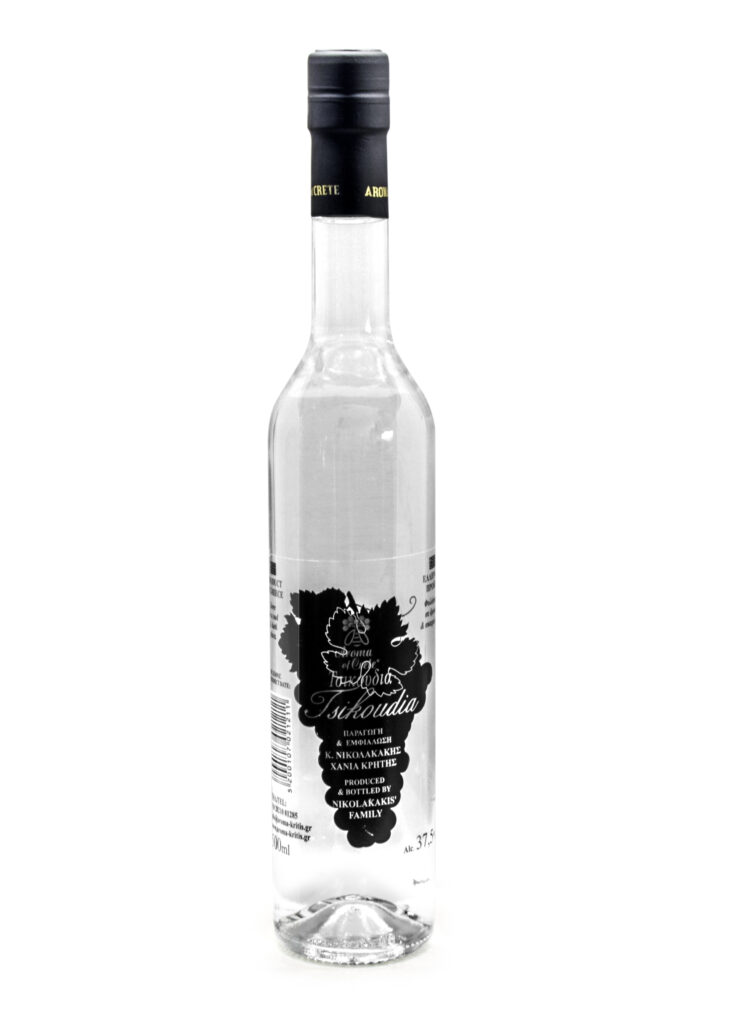
Tsikoudia, raki, tsipouro, ouzo – four names that even Greeks sometimes mix up. All four are clear spirits, but they differ in raw material, production and, above all, aroma.
Tsikoudia and Cretan raki: the same drink
In Crete, tsikoudia and raki are the same thing: a spirit distilled from fermented grape pomace, with no anise. The name simply changes from region to region. Learn more in What is tsikoudia?
Tsipouro
Tsipouro is also a pomace spirit, made mainly in Macedonia, Thessaly and Epirus on the Greek mainland. The key difference is that tsipouro comes both with and without anise, while Cretan tsikoudia is always anise-free. Grape varieties and distilling methods often differ too.
Ouzo
Ouzo is made by distilling alcohol with anise and other aromatics, so it has a strong liquorice-like taste. Add water or ice and it turns milky white. Tsikoudia stays crystal clear.
What about Turkish raki?
Despite the shared name, Turkish raki is anise-flavoured and closer to ouzo. Cretan raki tastes nothing like it.
Quick comparison
| Spirit | Made from | Anise | Where |
|---|---|---|---|
| Tsikoudia / Cretan raki | Grape pomace | No | Crete |
| Tsipouro | Grape pomace | With or without | Mainland Greece |
| Ouzo | Alcohol distilled with anise & aromatics | Yes | Across Greece, e.g. Lesvos |
Which one should you try?
If you love clean grape flavours, Cretan tsikoudia is for you. For something rounder try our aged tsikoudia; for something sweet, rakomelo. To pick a quality bottle, read How to choose a good tsikoudia.