Anyone who has visited Crete has been offered a small glass of tsikoudia. Also called Cretan raki, it is the spirit that accompanies every meal, celebration and welcome on the island. This guide explains what tsikoudia is, how it is made and what to look for when you buy it.
Tsikoudia, defined
Tsikoudia is a clear spirit distilled from grape pomace – the skins, seeds and remaining juice left after grapes are pressed for wine. The pomace is left to ferment and is then distilled, traditionally in copper stills. The name comes from the Cretan word tsikoudo, meaning exactly that pomace.
“Tsikoudia of Crete” is a recognised geographical indication, which ties the spirit to the island, its grapes and its traditions.
Tsikoudia or raki?
In Crete the two words mean the same drink. In the east of the island people tend to say “raki”; in the west, around Chania, “tsikoudia”. Don’t confuse it with Turkish raki or Greek ouzo, which are flavoured with anise. We compare them in detail in Tsikoudia vs raki, tsipouro and ouzo.
How tsikoudia is made
- Harvest and winemaking: the grapes are pressed and the must becomes wine.
- Fermenting the pomace: the leftover pomace rests in barrels for a few weeks.
- Distillation: in autumn the kazani season begins – one of Crete’s most festive traditions. Read more in The raki distilling season in Crete.
- Bottling: the spirit rests and is bottled, or aged to become aged tsikoudia.
What good tsikoudia tastes like
Good tsikoudia is clean, with aromas of grape and fruit, warming without burning. Its character depends on the grapes: single-variety spirits such as our Tsikoudia Romeiko and Tsikoudia Roussanne each have their own aromatic profile.
Our family’s tsikoudia
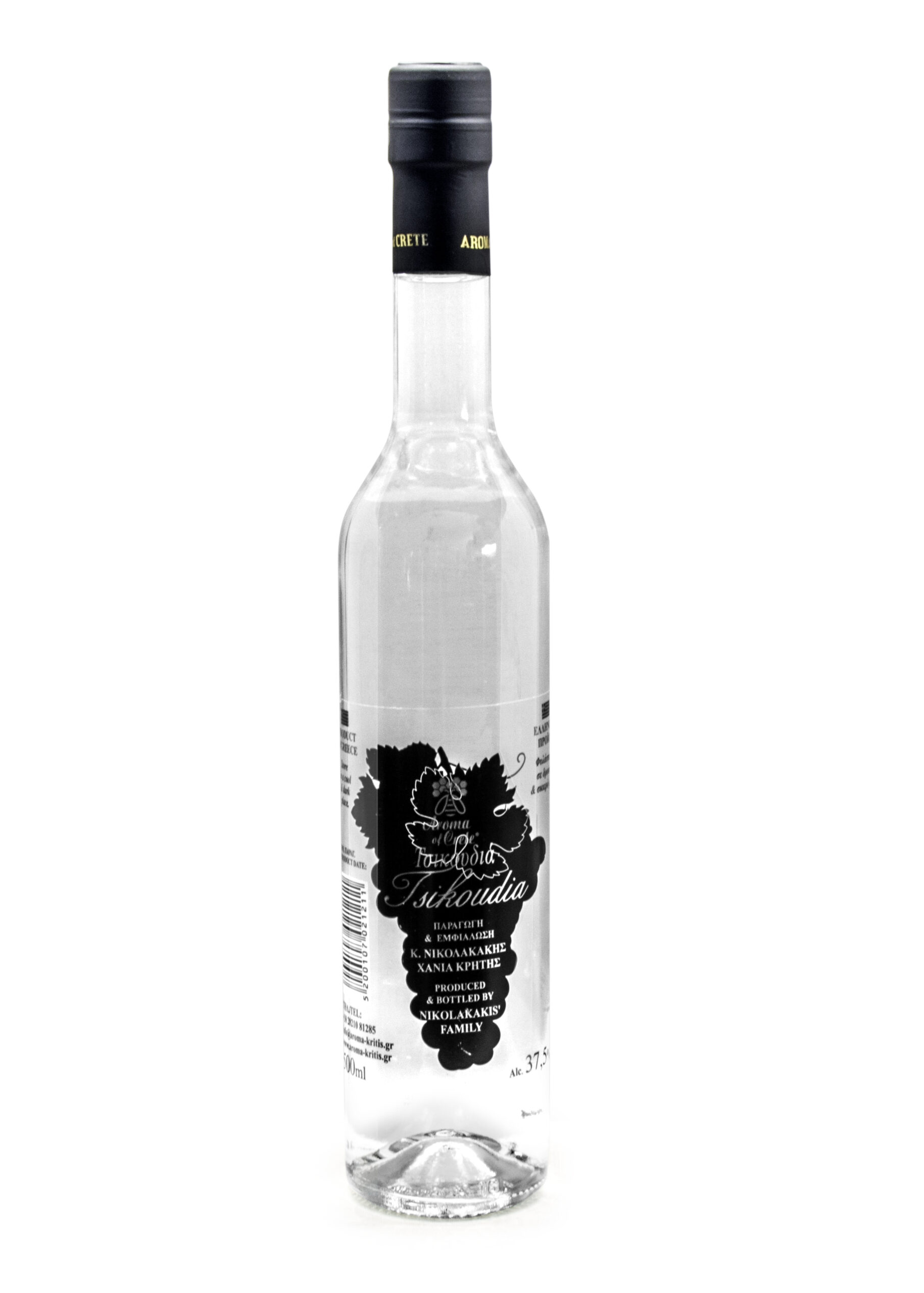
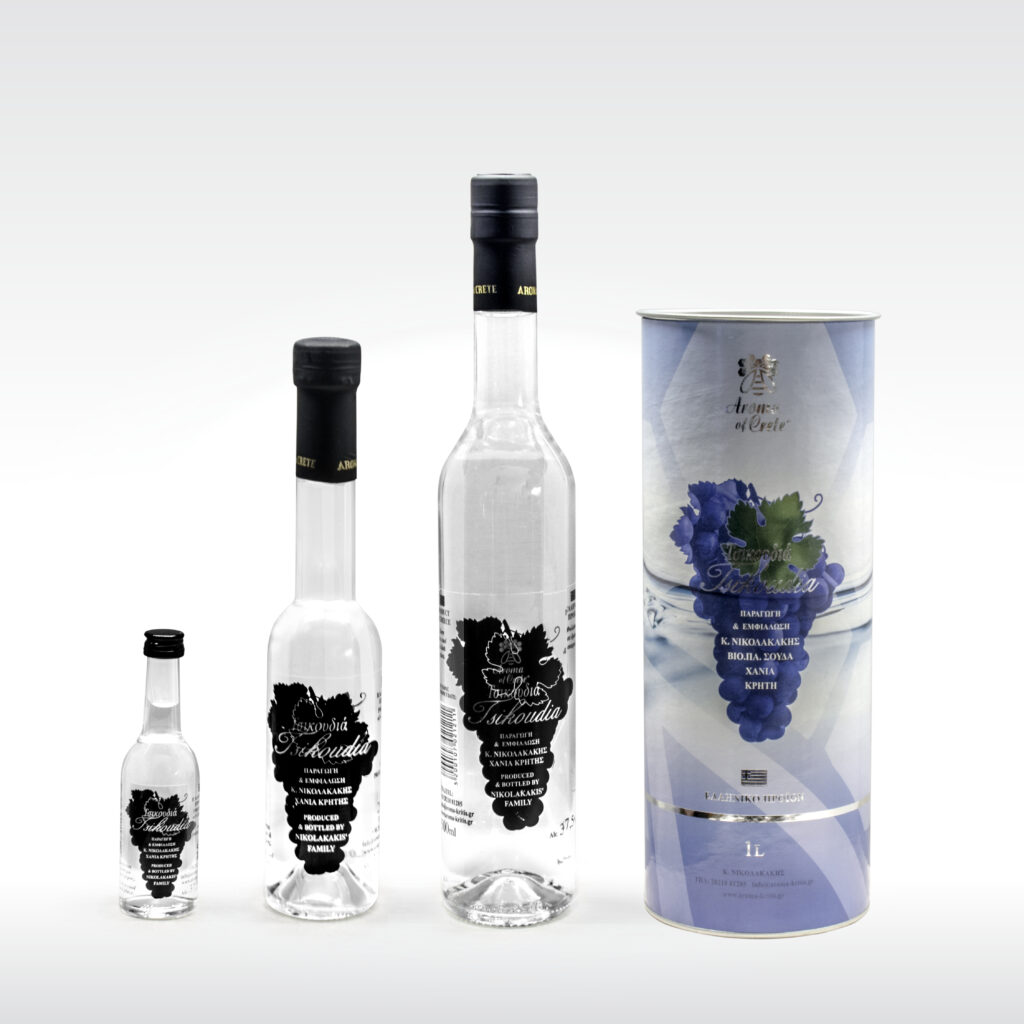
Aroma of Crete tsikoudia is produced and bottled at the K. Nikolakakis distillery in Souda, Chania, and comes in 50 ml, 200 ml and 500 ml bottles and a 1 litre bottle in a gift tube. Browse all our products or learn how to drink tsikoudia the Cretan way.
Please enjoy responsibly.